


Rudolf Khafizovich Zaripov
Home → Hall of Fame → Rudolf Khafizovich Zaripov
Cyberneticist, composer, researcher (for anniversary of his birth)
Author: Peter Chachin. Translated and edited by Alexander Nitusov
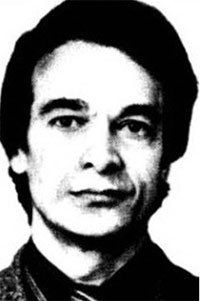
Rudolf Khafizovich Zaripov (1929 – 1991) was the Soviet mathematician and cyberneticist, one of the first Soviet researchers in the field of Artificial Intelligence. He also worked on computer-based modelling and writing of music.
Zaripov was born on the 29th of October 1929, in the town of Kazan. In 1947 he graduated from school and also music school specialising in cello. He combined interest in mathematics with deep knowledge in literature and music. In the same year he started his learning at the Kazan State University faculty of physics and mathematics.
In 1951, upon the decision of the USSR Ministry of Higher (university) Education, Zaripov, - one of the top students, - was transferred to the Moscow State University (MSU), also to the faculty of physics and mathematics, - the USSR highest level mathematical faculty. In December 1952 he graduated with a diploma in “Mathematics”. After that he worked at the Institute of Psychology (at the USSR Academy of Sciences) and at the USSR Academy computer centre.
In 1954 he entered postgraduate school to receive a scientific degree. By the late 1950s
Zaripov published a series of articles in which he presented his solving of several difficult problems in the field of nonlinear integral equations of convolution type. In 1958 he successfully defended his thesis (dissertation) and, most probably, would make a prominent expert in this purely mathematical research field, however, his passion for music took over.
He strove for the world of musical creativity, to use mathematics for understanding the mysteries of harmony. In 1960, scientific journal “Reports of the USSR Academy of Sciences” (Доклады АН СССР) published article “On the algorithmic Description of the Music Composition Process”. For its author - Rudolf Zaripov, it became a turning point in his scientific work. Since then, and till the end of his life, he devoted all his efforts and talent to the study of creative processes.
Zaripov was seriously interested in the psychology of creativity. He worked several years at the Institute of General and Educational Psychology laboratory of heuristic, because contacts with psychologists were necessary for his research. During those years he analysed works of professional composers and continued to create programs reproducing various stages of musical composition.
Most popular works of Zaripov are single-voice marches and waltzes, which he modelled in the 1960s with electronic computer URAL (ЭВМ «Урал»), and named the works - “Ural Tunes”.
He often participated at various conferences and delivered lectures, which he always accompanied with cello performances, playing music created by computer with use of his algorithms. The computer generated melodies were later arranged by some famous composers and performed by orchestras.
His book “Cybernetics and Music” (1971) was translated in Italy. Its information about machine written musical works, created with his algorithms, eventually became famous all over the world. The composer himself was recognized as an authority in the field of machine music. His book “Search for Models of Creative Processes Using Computers” (1983) summarised results of his research on creation models of musical works computer aided generation process.
In the late 1980s Zaripov developed an extensive research program aimed at creation of certain artificial intelligence systems, able to reproduce activities characteristic of creative processes.
Unfortunately, his premature death (1991) cut short his work on implementation of that program.
About the author: P.P. Chachin, maintains the “Communications” section of the “Virtual Computer Museum”.
The article was first published in the weekly “IT News”, 23.10.2019
Placed in the museum on permission of the editorial board.
